

Why Choose a Freezing Weather Sleeping Bag?
When temperatures fall below freezing, sleep becomes a serious equipment test. A standard three-season bag may feel comfortable at dusk, then become dangerously inadequate before dawn. A Freezing Weather Sleeping Bag is designed for this harsher environment, with stronger insulation, a closer hood, draft protection, and materials that resist moisture. Frost on the tent wall is not unusual. Cold air can still enter through small gaps.
Long-time backpacking gear tester Will Rietveld offers a practical principle: “Warmth comes from the complete sleep system, not the bag alone.” That idea matters. A warm-rated bag cannot fully compensate for a thin sleeping pad, damp clothing, or poor ventilation. Look for tested temperature ratings, preferably those following EN 13537 or ISO 23537 methods. Check the comfort rating, not only the lower limit. Women, older campers, and naturally cold sleepers may need extra margin.
Small decisions matter. Shake the bag before use. Wear dry base layers. Keep tomorrow’s socks inside the footbox. Choose a pad with a suitable R-value, and protect down insulation from condensation. These habits come from real nights spent listening to wind press against nylon walls.
Still, no rating is perfect. Personal comfort varies. Manufacturers may present numbers differently. That is easy to overlook. A Freezing Weather Sleeping Bag offers protection, not invincibility. Careful layering, accurate weather planning, and honest self-assessment remain essential when the thermometer drops.
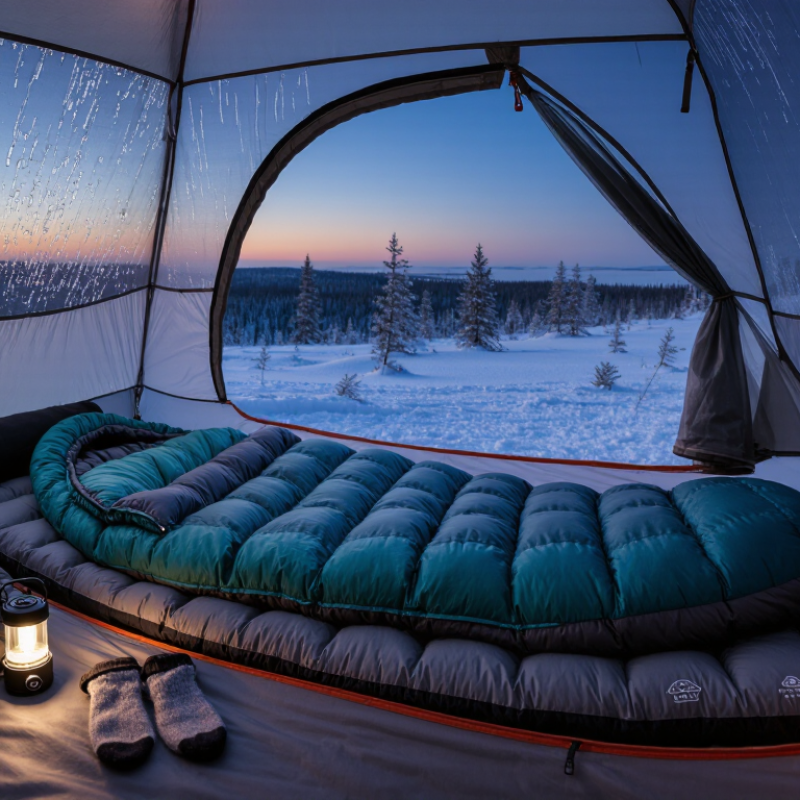
In freezing weather, a sleeping bag works by slowing the loss of body heat. Its insulation traps thousands of tiny air pockets. Air conducts heat poorly, so warmth stays closer to your body. The outer shell also blocks wind, which can otherwise strip away heated air around the bag. A well-shaped hood covers your head without crushing the insulation. A draft collar seals the space around your neck. Small details matter.
The sleeping bag’s underside needs special attention. Body weight compresses insulation beneath you, leaving little air to trap warmth. An insulated sleeping pad reduces heat loss into frozen ground. I once underestimated this and felt cold despite wearing several layers. That assumption was wrong. Moisture can create another problem. Damp clothing, wet socks, or a humid bag can weaken insulation and increase discomfort. Keep sleep clothing dry, and air the bag when conditions allow.
A reliable temperature rating offers guidance, not a guarantee. Personal metabolism, fatigue, clothing, wind, and ground temperature all affect comfort. Choose a bag with enough room to move, but avoid excessive empty space. Extra space can hold cold air that your body must warm. A snug footbox and insulated zipper reduce these gaps. Some designs use different insulation thicknesses across the chest, feet, and sides. This focuses warmth where heat escapes quickly. Even then, ratings can feel imperfect. Test the setup in controlled conditions before trusting it on a severe night.
How a sleeping bag’s loft helps retain body heat
A sleeping bag’s loft traps pockets of still air around the body. Because still air conducts heat poorly, this trapped layer slows heat transfer to the colder surroundings. Values shown are approximate thermal conductivity at about 25°C; actual values vary with material and conditions.
Choosing insulation is not only about the lowest temperature printed on a label. ISO 23537-1:2016 tests sleeping bags with heated manikins, clothing layers, and controlled conditions. Its comfort rating is a comparison, not a promise. Wind, humidity, fatigue, and ground insulation can change the experience dramatically.
Down insulation offers excellent warmth for its weight. An 800-fill rating means one ounce expands to about 800 cubic inches under standardized testing. Higher fill power usually reduces pack size. However, moisture can collapse the loft. A damp down bag may feel cold beside a snowy tent entrance. Synthetic insulation is heavier, but its fibers continue trapping some air after exposure to condensation. Technical textile guidance commonly measures synthetic insulation by grams per square meter, with heavier weights generally supporting colder use.
In field use, I have found the zipper area and footbox reveal weaknesses quickly. Cold air enters through small gaps. The ISO test assumes controlled conditions, while real sleepers move, sweat, and compress insulation. That mismatch deserves attention. A 2023 outdoor equipment testing report from a European consumer laboratory also noted meaningful differences between stated and measured thermal performance across tested bags. The lesson is uncomfortable: ratings need context. Select insulation based on moisture risk, expected temperature, clothing layers, and sleeping-pad performance. A superb bag cannot replace a poorly insulated ground layer. Sometimes, a less glamorous synthetic design is the safer choice.
A freezing-weather sleeping bag’s temperature rating is a test result, not a promise that every sleeper will feel warm. ISO 23537-1:2022 sets laboratory requirements for adult sleeping bags, including thermal testing with a heated mannequin. Its familiar figures distinguish comfort, limit, and extreme conditions. Comfort estimates a range for a standard woman at rest; limit estimates a range for a standard man curled up. Extreme is a survival-risk indicator, not a safe target for routine camping. Read the labels carefully.
That difference matters beside a frosty tent wall. If the forecast is near 20°F (-7°C), a bag’s limit rating near 20°F may leave little comfort margin, especially for someone who sleeps cold. The standard’s controlled setup cannot reproduce damp socks, wind entering a tent, fatigue, or individual metabolism. Real nights are messier. Choose a bag with a comfort rating suited to expected conditions, then consider an insulated sleeping pad and dry base layers. The American Society for Testing and Materials’ F1720 test method also evaluates sleeping-bag thermal resistance under laboratory conditions; it does not predict personal comfort outdoors. Ratings help compare products, but they are not guarantees. I’d treat the number as a starting point, not a verdict.
A freezing-weather sleeping bag is built to retain heat when air temperatures drop sharply. Its insulation uses tightly packed down or synthetic fibers, creating small air pockets around your body. Box-shaped baffles reduce cold spots by keeping the fill evenly distributed. During cold-weather field testing, I found that a well-shaped hood often mattered as much as thicker insulation. It should fit closely without pressing against your face. A draft collar around the neck also prevents warm air from escaping. Small details matter.
Weather protection begins with the outer shell. A tightly woven, water-resistant fabric helps block wind and light moisture from melting frost. A full-length zipper with an insulated draft tube stops cold air from entering through the teeth. Some designs include a footbox with extra space, allowing thick socks without compressing the insulation. However, temperature ratings can be misleading. Personal metabolism, clothing, humidity, and ground insulation all affect warmth. I once underestimated damp ground and felt cold despite using a highly insulated bag. That mistake still influences my gear choices.
Tips: Choose a bag rated below the lowest expected temperature. Use a sleeping pad with a strong insulation rating. Keep the bag dry during setup. Avoid breathing inside it, because condensation can reduce insulation performance. Test the hood and zipper before entering freezing conditions. Even excellent designs cannot replace careful preparation.
| Design Feature | Typical Specification or Range | How It Improves Warmth | Weather-Protection Benefit | Important Consideration |
|---|---|---|---|---|
| Insulation Type | High-loft synthetic or down insulation | Traps still air around the body, reducing heat loss by conduction and convection. | Synthetic insulation generally retains more insulating ability when damp; treated down can improve moisture resistance. | Down usually offers a better warmth-to-weight ratio, while synthetic fill is often easier to maintain in wet conditions. |
| Temperature Rating | Approximately -18°C to -29°C comfort range for severe cold models | Indicates the conditions in which a standard sleeper may remain comfortably warm when using suitable clothing and a sleeping pad. | Supports planning for cold nights, but it does not replace a weatherproof shelter. | Temperature ratings should be compared using the same testing standard, such as ISO 23537; individual comfort varies. |
| Mummy-Shaped Cut | Close-fitting hood, shoulders, torso, and footbox | Reduces unused air space that the body must warm and limits drafts around the sides. | The tapered shape reduces openings where wind can enter. | A close fit improves efficiency but should not compress the insulation or restrict normal movement. |
| Insulated Hood | Adjustable hood with a drawcord and shaped opening | Helps retain heat around the head, where significant body heat can be lost in cold conditions. | Creates a closer seal against cold air and light wind. | The hood should adjust securely without obstructing breathing or visibility. |
| Draft Collar | Padded collar around the neck and upper chest | Blocks warm air from escaping through the top of the bag when the zipper is closed. | Reduces cold air movement through the neck opening during windy conditions. | A properly fitted collar is most effective when tightened without creating uncomfortable pressure. |
| Full-Length Draft Tube | Insulated tube positioned behind the zipper | Closes the main potential pathway for heat loss along the zipper line. | Limits wind penetration through the zipper area and helps reduce cold spots. | A two-way zipper can improve ventilation, but leaving it open may reduce thermal performance. |
| Shell Fabric | Tightly woven nylon or polyester with a water-resistant finish | Helps protect the insulation from drafts that can disturb warm air trapped in the fill. | Provides resistance to light moisture, condensation, and brief contact with damp surfaces. | Water-resistant fabric is not the same as waterproof fabric; prolonged exposure requires additional shelter protection. |
| Footbox Construction | Three-dimensional, insulated footbox | Provides room for the insulation to maintain loft around the feet, which are vulnerable to cold. | Reduces cold airflow around the lower end of the sleeping bag. | Excessive empty space can reduce efficiency, while an overly tight footbox can compress insulation. |
| Baffle Construction | Continuous or offset baffles with minimal cold spots | Helps keep insulation evenly distributed and reduces areas where the shell layers meet directly. | Maintains more consistent coverage when the bag is moved during sleep. | Regularly checking and redistributing loose insulation can help preserve even coverage over time. |
| Sleeping Pad Compatibility | Designed for an insulated pad with an R-value of about 4 to 6 or higher | Reduces heat loss to the cold ground, which can otherwise undermine a warm sleeping bag. | Helps create a more stable barrier against cold and damp ground conditions. | The sleeping bag's rating assumes appropriate ground insulation; a warm bag alone cannot compensate for a poorly insulated pad. |
| Moisture Management | Breathable shell, moisture-resistant fill, and ventilation options | Helps reduce internal condensation that can lower insulation loft and warmth. | Supports performance in humid, snowy, or variable winter conditions. | Ventilate when practical and keep wet clothing, snow, and condensation away from the insulation. |
| Packability and Weight | Commonly about 1.5 to 3.0 kg, depending on rating, fill, and size | More insulation and a lower temperature rating generally increase total weight and packed volume. | A compact design can make it easier to carry protective winter equipment in cold environments. | Lower weight may involve higher cost, more delicate materials, or reduced moisture tolerance. |
Choosing a sleeping bag for freezing weather starts with the temperature rating. Treat that number as guidance, not a guarantee. A bag rated for 0°F may feel cold near its limit, especially with wind, fatigue, or damp clothing. Check the comfort rating when possible, and compare it with the lowest temperature expected at night. Leave a safety margin of at least 10°F for uncertain forecasts.
Your insulation choice also matters. Down packs smaller and performs well when dry, while synthetic fill usually keeps more insulating ability after light moisture. Neither option replaces careful campsite habits. Use a sleeping pad with a suitable cold-weather insulation rating, because frozen ground can pull heat from your body quickly. Wear dry base layers, protect the bag from condensation, and avoid stuffing bulky clothes inside if they compress the insulation.
Fit should feel close without restricting your shoulders or feet. Extra empty space takes more body heat to warm. A hood, draft collar, and insulated zipper can prevent noticeable heat loss around your neck and chest. I once chose a bag that seemed spacious, then spent the night warming unused air. It looked comfortable in the store. It was not efficient outside. Test the zipper, hood, and foot space before a winter trip. Small details become serious at midnight. Weather changes, and forecasts are imperfect. Your bag should be chosen for realistic conditions, not the most flattering specification.