
Blog

Why Are Zebra Window Blinds So Popular?

Zebra Window Blinds have moved from a specialist furnishing choice into mainstream interior design. Their appeal is practical: alternating sheer and opaque fabric panels allow users to soften daylight, improve privacy, and control glare without fully darkening a room. A hand-operated chain or motorized control can shift the stripes gradually, like adjusting a camera lens. Small change, noticeable comfort.

Industry data supports the wider demand for adaptable window coverings. Grand View Research’s Window Covering Market report identifies rising interest in light control, energy efficiency, and smart-home integration through 2030. Mordor Intelligence also reports continued growth in the global blinds and shades market, driven by residential renovation and connected-home technologies. These reports usually combine curtains, shades, shutters, and blinds. They do not measure Zebra Window Blinds separately, so their figures require careful interpretation.

From professional installation experience, fabric quality often determines the final result. Dense blackout bands can support bedroom privacy, while open sheer bands maintain a brighter daytime atmosphere. Correct measurements matter too. A few millimeters can create uneven edges, visible gaps, or difficult operation. The U.S. Department of Energy notes that window treatments can influence solar heat gain, although performance depends on glass, orientation, climate, and installation.

That is the less glamorous truth. Zebra blinds are not automatically energy-saving. Their popularity comes from balanced functionality, visual simplicity, and flexible control. As homes become brighter, smaller, and more technology-oriented, this combination explains why the product continues attracting homeowners, designers, and property developers.
Why Are Zebra Window Blinds So Popular?

What Are Zebra Window Blinds?

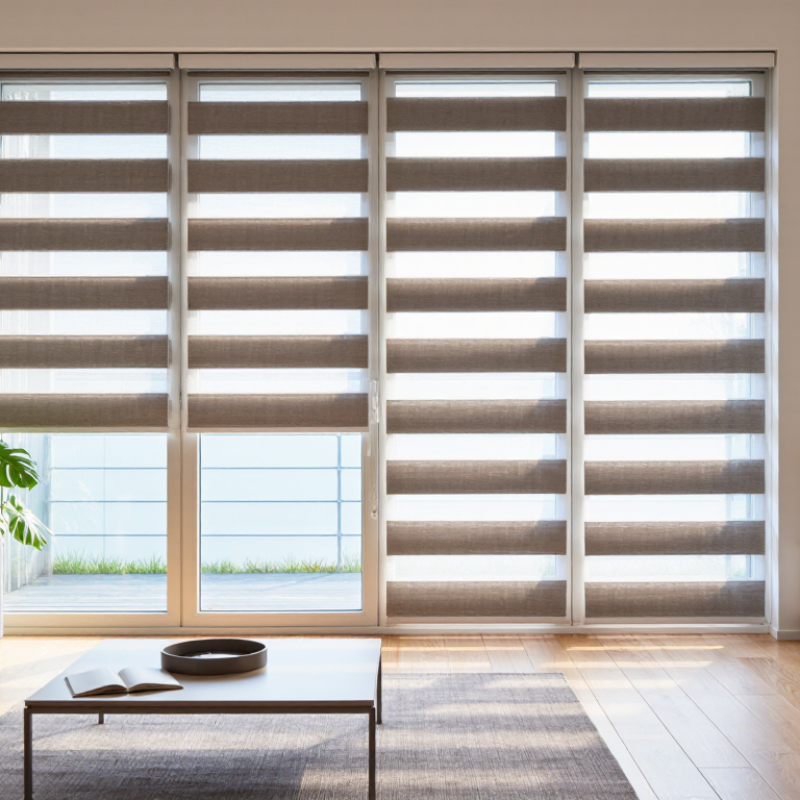
Zebra window blinds are dual-layer shades made from alternating bands of sheer and opaque fabric. The bands slide across each other as the blind moves. This creates three practical settings: filtered daylight, partial privacy, or stronger light control. The idea is simple. Their flexibility explains much of their popularity.

In a sun-facing room, the sheer bands soften glare while preserving a view outside. Aligning the solid bands creates deeper privacy without fully darkening the room.

According to the U.S. Department of Energy’s Energy Saver guidance, about 76% of sunlight reaching standard double-pane windows can enter as heat during summer. Zebra blinds may reduce that exposure, but performance depends on fabric color, window direction, gaps, and installation quality. They are not magic.

The International Energy Agency reports that buildings account for roughly 30% of global final energy consumption. This makes daylight and solar control relevant design decisions, not merely decorative choices.

Professional measurement matters.

A narrow side gap can admit sharp morning light, while a loose fabric panel may look uneven. Industry energy-rating methods, including those used by the Attachments Energy Rating Council, evaluate window coverings under controlled conditions rather than promising identical savings in every home. That distinction is important. A zebra blind can improve comfort, but it cannot replace suitable glazing, ventilation, or thoughtful room design.

How Do Zebra Window Blinds Work?

Zebra window blinds use two fabric layers to control light and privacy. Each layer has alternating transparent and opaque stripes. As one layer moves, the stripes shift against the other layer. When sheer sections overlap, daylight enters softly. When solid bands overlap, the room becomes more private. This creates a flexible filter rather than a simple open-or-closed covering. The mechanism is straightforward, but accurate alignment matters. A chain, cordless control, or motor moves the fabric smoothly along the window.

In daily use, I adjust the stripes according to the room’s changing light. Morning sunlight can pass through the sheer bands without making the room feel harsh. At midday, the solid bands reduce glare on screens and furniture. For bedrooms, closer alignment offers better privacy, especially at street level. However, these blinds rarely create complete darkness. Small gaps around the fabric may still let light enter. Their performance depends on correct measurements and careful installation.

Maintenance is practical. Dust can collect on the horizontal folds, so gentle vacuuming with a soft brush helps. Avoid pulling the fabric sideways. It may damage the alignment. I have noticed that darker fabrics often feel more private, but they can make small rooms appear heavier. Light colors usually brighten a space, though they may show dust sooner. Zebra blinds are useful, not perfect. Their balance of light and privacy still requires thoughtful adjustment.

What Features Make Zebra Blinds Popular?

Why Are Zebra Window Blinds So Popular?

Zebra blinds combine alternating sheer and opaque fabric bands. A small chain movement can shift the bands from open daylight to soft privacy. This makes them more flexible than ordinary roller shades. They also create a clean, layered appearance without heavy curtains. In compact rooms, that matters. The fabric sits close to the glass, preserving wall space and reducing visual clutter.

Energy performance adds practical value. The U.S. Department of Energy reports that windows can account for 25–30% of residential heating and cooling energy use. Zebra blinds cannot eliminate that loss, but their adjustable layers may reduce direct glare and solar heat when positioned correctly. The result depends on window direction, fabric color, and installation quality. Darker fabrics may absorb more heat. That detail is easy to overlook.

Market interest reflects changing expectations. Grand View Research’s 2024 Window Coverings Market report identifies growing demand for functional, attractive, and customizable coverings. Zebra designs answer all three needs. Many users choose them for bedrooms, offices, and street-facing living rooms. They offer privacy without making the room completely dark. Not perfect, though. The horizontal bands need careful alignment, and dust can collect along their edges. Regular vacuuming with a soft brush helps maintain smooth operation.

How Do Zebra Blinds Improve Light and Privacy Control?

Zebra window blinds are popular because they make light and privacy easier to adjust throughout the day. In my experience, their alternating sheer and opaque bands offer more control than ordinary roller shades. When the bands overlap, sunlight softens without making the room completely dark. A small adjustment can reduce glare on a computer screen or television. The room still feels bright. At night, closing the opaque sections helps limit views from outside. However, these blinds are not always fully blackout products. Streetlights may still create a faint glow around the edges. That detail matters in bedrooms and nurseries.

For practical use, living rooms often benefit from partially open bands during daylight hours. This arrangement admits natural light while reducing direct views into the home. In bedrooms, the bands can remain closed for stronger privacy. Accurate window measurements are essential, especially for inside-mounted blinds. A narrow gap can allow unwanted light and reduce privacy. I prefer checking the window at different times, because morning and evening light behave differently. Fabric density also affects glare, color, and visibility. Cleaning is usually simple with a soft brush or dry cloth. Still, dust can collect along the band edges. I once underestimated that maintenance detail, and the blinds looked dull sooner than expected. Their flexibility is valuable, but no single setting works perfectly for every room.

What Should You Consider Before Choosing Zebra Blinds?

Why Are Zebra Window Blinds So Popular?

Zebra blinds combine alternating sheer and opaque fabric bands in one clean design. Their popularity comes from flexible light control, simple lines, and improved daytime privacy. However, appearance should not be your only concern. A blind that looks perfect online may feel unsuitable in your room.

Measure each window separately, including the frame depth and handle position. Small measurement errors can leave visible gaps or prevent smooth operation. Consider the room’s direction, too. South-facing windows may need stronger light filtering, while darker rooms may benefit from more open sheer bands. Moisture also matters. Kitchens and bathrooms require fabrics that resist damp conditions and clean easily. Fabric texture, color, and openness affect how much daylight enters.

Tips: Test samples near the window at different times. Morning light can look surprisingly different from evening light. Check the lifting system and keep cords or chains away from children and pets. Ask for installation instructions and confirm whether inside or outside mounting suits your frame. Choose a reliable supplier with clear product specifications, warranty terms, and accessible support.

Zebra blinds are not automatically ideal for every window. I sometimes favor curtains in bedrooms where complete darkness matters. Roller shades may also work better for unusually narrow or deep frames. Think about cleaning habits, privacy needs, and daily use before choosing. A beautiful blind can become frustrating if its operation feels awkward.

Why Are Zebra Window Blinds So Popular? - What Should You Consider Before Choosing Zebra Blinds?

Evaluation Dimension Typical Zebra Blind Information Practical Benefit Potential Limitation Suitability Rating
Light Control Two horizontal fabric layers alternate between translucent and opaque bands. Moving the layers changes the amount of daylight entering the room. Allows users to switch between filtered daylight, partial shading, and a more closed position without replacing the blind. They may not provide complete blackout unless a blackout fabric, side channel, or additional window treatment is used. High
Privacy Privacy depends on the position of the solid bands, the fabric transparency, room lighting, and the time of day. Closed opaque bands can reduce direct visibility into the room while still offering adjustable daylight. At night, interior lights can make silhouettes visible through translucent sections if the blind is not fully adjusted. High
Appearance Alternating fabric bands create a clean, modern appearance with horizontal visual lines. Works well with contemporary, minimalist, transitional, and many neutral interior styles. The striped design may not match highly traditional or heavily decorative rooms. High
UV and Glare Reduction Translucent and solar-control fabrics can reduce glare and filter part of the sun’s ultraviolet radiation; performance varies by fabric color and construction. Can improve screen visibility and help reduce direct sunlight on furniture, flooring, and artwork. UV protection is not identical to complete UV blockage, and strong sunlight may still cause fading over time. Medium–High
Energy Performance Fabric blinds provide some shading and can reduce solar heat gain when positioned correctly, especially on sunny windows. May help rooms feel cooler during periods of strong sunlight and support more comfortable indoor temperatures. They are not a substitute for low-emissivity glass, exterior shading, insulation, or well-sealed windows. Medium
Blackout Capability Standard zebra fabrics usually provide light filtering rather than true blackout. Blackout versions are available in some constructions. Blackout fabric can improve sleep conditions in bedrooms, nurseries, and media rooms. Light can still enter around the side, top, or bottom gaps unless the system is installed with suitable coverage. Medium
Cleaning and Maintenance Routine care generally includes dusting with a soft cloth, using a gentle brush attachment, and removing small marks with a lightly damp cloth when permitted by the fabric instructions. Regular low-moisture cleaning can help preserve the fabric and operating mechanism. Harsh chemicals, soaking, abrasive tools, and excessive force may damage the fabric or cause band misalignment. High
Operation Available with chain, cord-free, spring-assisted, or motorized control systems, depending on the product configuration. Cord-free and motorized options can improve convenience, accessibility, and child-safety conditions. Motorized versions require battery charging or electrical planning and generally cost more than manual systems. Medium–High
Window Compatibility Can be installed inside or outside the window recess and are commonly made to measure for different window widths and heights. Custom sizing can provide a neater appearance and more consistent light control than poorly fitted ready-made products. Deep handles, unusual frames, shallow recesses, and opening windows may affect mounting and operation. High
Typical Product Cost Indicative retail pricing for a standard-sized made-to-measure manual blind is often about US$50–US$250 per window; larger, premium-fabric, motorized, or professionally installed systems may cost more. Offers a middle-ground option between basic roller shades and more complex motorized or layered window treatments. Prices vary significantly by window size, fabric, control method, installation, region, and customization level. Medium
Expected Service Life With appropriate use and maintenance, many quality interior fabric blinds can remain functional for approximately 5–10 years or longer, although the actual life varies by materials, sunlight exposure, and operating frequency. Provides a reasonably durable solution for everyday residential use. Frequent pulling, moisture, pets, children, and strong direct sunlight can shorten the service life. Medium–High
Moisture Exposure Most fabric zebra blinds are better suited to dry rooms. Bathrooms and high-humidity areas require moisture-resistant materials and adequate ventilation. Suitable for living rooms, bedrooms, home offices, and many dining areas. Persistent moisture can contribute to staining, mildew, fabric deformation, or hardware corrosion if the product is not designed for wet locations. Medium
Best Room Applications Common choices include living rooms, bedrooms, dining rooms, home offices, and rooms where adjustable privacy is important. Combines a softer fabric appearance with more control than a conventional single-layer shade. For complete darkness, maximum thermal control, or very high humidity, another treatment may be more appropriate. High
Main Buying Checks Confirm exact measurements, fabric transparency, blackout requirements, mounting depth, control type, child-safety features, cleaning instructions, and installation method before ordering. Helps prevent sizing errors and ensures that the blind meets the room’s light, privacy, and operating needs. Choosing only by color or price may result in unsuitable light control, poor fit, or inconvenient operation. Essential

Note: Cost ranges, service life, light control, and energy performance are indicative and can vary according to window size, fabric construction, installation quality, climate, and usage.

Now Hiring!