Why Choose a Vegetarian Flavor Enhancer for Global Sourcing?
Global food manufacturers are rethinking flavor sourcing as plant-based demand moves from niche shelves into everyday meals. The Good Food Institute reported that U.S. plant-based retail sales reached $8.1 billion in 2023. This signals durable consumer interest, although growth is uneven across categories. Taste still decides repeat purchase.
A Vegetarian Flavor Enhancer can support soups, sauces, snacks, instant noodles, and meat alternatives without relying on animal-derived ingredients. Yeast extracts, mushroom concentrates, fermented vegetable powders, and roasted spice blends can create savory depth. Picture a clean-label soup base with a fuller aroma, shorter ingredient handling, and consistent performance across production batches. Innova Market Insights’ 2024 consumer trend research highlights plant-based innovation, natural positioning, and value as important food industry priorities. These priorities make supplier evaluation more demanding.
Global sourcing requires more than a promising sample. Buyers should verify origin, allergen controls, microbiological testing, traceability, processing aids, and local labeling requirements. The Codex Alimentarius framework offers internationally recognized food safety and labeling guidance, but national rules still differ. That gap matters. A flavor system accepted in one market may need reformulation elsewhere. Suppliers should provide technical specifications, certificates, stability data, and batch documentation. Independent laboratory testing adds confidence.
The choice is not automatically better.
Some vegetarian enhancers taste highly savory but contain excessive sodium. Others lose aroma during retort processing or storage. Sensory trials, pilot production, and shelf-life checks remain essential. A careful sourcing strategy connects consumer expectations with measurable quality, regulatory discipline, and realistic cost control. That is where Vegetarian Flavor Enhancer solutions can become commercially credible, not merely fashionable.
What Is a Vegetarian Flavor Enhancer?
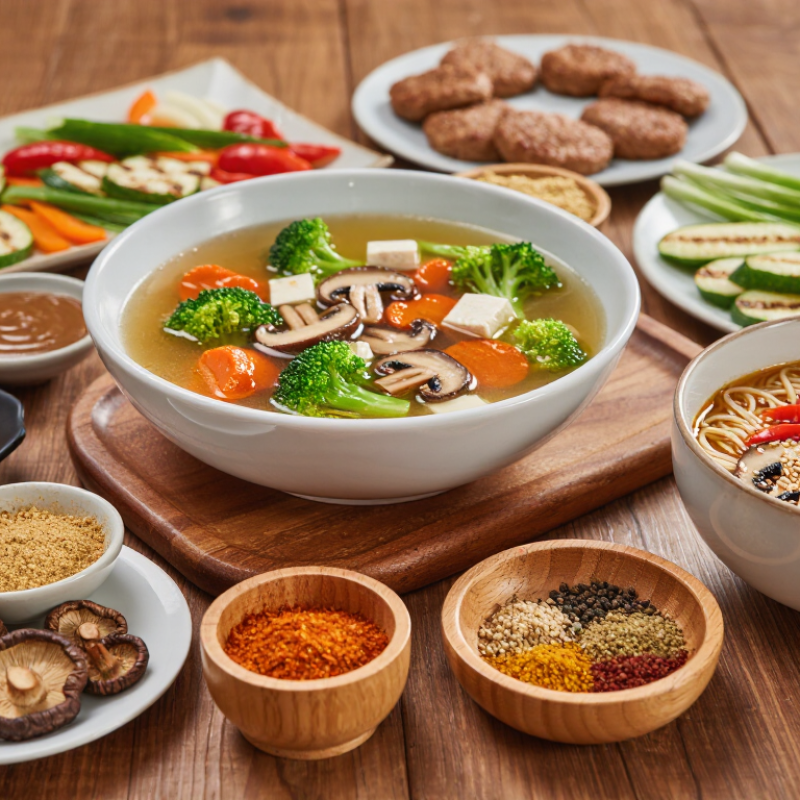
A vegetarian flavor enhancer deepens savory taste without meat, fish, or animal-derived stock. It may contain yeast extracts, fermented vegetable concentrates, mushroom compounds, spices, or plant-based amino acids. These ingredients support umami, aroma, and mouthfulness in soups, sauces, snacks, and ready meals. The term describes a formulation choice, not one fixed chemical. That distinction matters when sourcing across markets.
In product development, specialists test enhancers in real recipes, not only in water. Heat, salt, acidity, and fat can change performance. A well-designed enhancer should strengthen other ingredients without leaving a harsh aftertaste. Small sensory trials compare broth clarity, roasted notes, and lingering flavor. Sometimes the result is uneven. That feedback remains valuable.
Reliable sourcing requires more than a vegetarian claim on a sales sheet. Buyers should review ingredient lists, processing aids, allergen controls, origin records, and manufacturing specifications. Vegetarian does not always mean vegan, and local definitions may differ. Ask for current documentation and verify changes during reformulation. Independent laboratory testing can support identity and safety checks. Trained sensory panels also assess consistency from batch to batch. Transparency matters when labels face different regulatory expectations worldwide.
How Vegetarian Flavor Enhancers Are Made
Vegetarian flavor enhancers usually begin with familiar materials: yeast, mushrooms, seaweed, corn, peas, or fermented vegetables. Suppliers inspect each lot for identity, moisture, contaminants, and traceability. Workers then wash and mill the raw materials before extraction. Fermentation or enzymatic hydrolysis breaks proteins into savory peptides and naturally occurring glutamates. This step builds depth, not only saltiness.
The liquid extract is filtered, concentrated, and commonly spray-dried into a stable powder. Some producers blend it with vegetable powders or mineral salts for a rounder taste. Process controls matter. The World Health Organization recommends less than 2,000 milligrams of sodium daily for adults, so formulators should measure sodium per serving, not rely on “vegetarian” wording. The FAO’s 2022 report estimated agrifood systems produced 31% of global human-caused greenhouse gas emissions in 2019. That figure makes local crops, efficient drying, and shorter supply routes worth examining.
The process is not flawless. Heat can reduce delicate aromas, while intensive drying consumes energy. I would ask for origin records, allergen controls, microbial testing, and batch specifications before global sourcing. A plant-based input is not automatically sustainable or nutritionally superior. Taste trials still matter. Small differences in fermentation time can change color, solubility, and aftertaste. That detail is easy to miss.
Key Benefits for Global Food Sourcing
Why Choose a Vegetarian Flavor Enhancer for Global Sourcing?
Global food sourcing increasingly values flexible, transparent, and plant-based ingredients. A vegetarian flavor enhancer can support savory taste without relying on animal-derived components. It may suit soups, sauces, snacks, noodles, and ready-to-cook meals across different markets. This flexibility can simplify product development when consumer preferences vary by region. However, vegetarian does not automatically mean vegan or allergen-free. Ingredient statements still require careful review. Supplier audits, traceability records, and batch specifications help buyers verify quality and consistency. Small details matter.
For global sourcing teams, stable flavor performance is a practical advantage. A consistent enhancer can reduce reformulation work between production sites. It can also help maintain a familiar taste when local raw materials change. Clear technical documents support communication among procurement, quality, and regulatory teams. Buyers should check sensory results in the final recipe, not only in laboratory samples. A product may perform well in broth but taste too strong in a low-sodium sauce. That lesson is easy to overlook. Cost, storage conditions, lead times, and minimum order quantities also influence the real sourcing value.
Tips: Request a complete ingredient and allergen statement. Confirm vegetarian suitability with written supplier documentation. Test samples after cooking and during shelf-life trials. Compare at least two supply scenarios before approval.
Why Choose a Vegetarian Flavor Enhancer for Global Sourcing?
Global plant-based flavor systems can draw on widely cultivated agricultural feedstocks, supporting broader sourcing options and reducing dependence on animal-derived ingredients.
Global production of selected crops in 2022, rounded to the nearest million tonnes. Maize, wheat, soybeans, and sugarcane are common upstream agricultural materials used in plant-based hydrolysis or fermentation systems. Production volume indicates potential supply availability, not the volume converted into flavor enhancers.
Source: FAOSTAT, Crops and livestock products, 2022 global production data.
Sourcing Standards, Certifications, and Supplier Evaluation
Why Choose a Vegetarian Flavor Enhancer for Global Sourcing?
A vegetarian flavor enhancer can support clean-label product development and wider market access. Yet sourcing requires more than a vegetarian statement. Buyers should request full specifications, ingredient origins, processing details, and allergen declarations. The supplier should explain whether the product is suitable for vegetarian or vegan applications. Cross-contact controls matter, especially in shared facilities. Ask for recent certificates, not scanned documents from years ago.
Recognized systems such as HACCP, ISO 22000, or FSSC 22000 can indicate structured food safety management. However, certification scope and expiry dates require careful checking. A credible supplier should provide batch-specific certificates of analysis, microbial results, heavy metal controls, and traceability records. Test samples from different production lots. One sample is not enough. In practice, paperwork may look excellent while flavor intensity changes slightly between batches. That weakness deserves discussion, not concealment.
Tips: Build a supplier scorecard before requesting quotations. Review quality history, production capacity, minimum order quantities, lead times, packaging strength, and complaint response times. Request a production sample in food applications, not only in water. Confirm change-control procedures and emergency communication contacts. A remote audit helps, but it cannot replace every site visit. I have found that small documentation gaps often reveal unclear responsibilities. They may be correctable, but they should never be ignored.
Applications Across International Food Markets
Why Choose a Vegetarian Flavor Enhancer for Global Sourcing?
Applications Across International Food Markets
Vegetarian flavor enhancers are gaining attention across international food markets. The Good Food Institute reported that global plant-based meat retail sales reached approximately US$6.1 billion in 2022. This growth increases demand for savory systems that support taste without animal-derived ingredients. Yeast extracts, mushroom concentrates, fermented vegetables, and seaweed can create layered umami notes. They suit soups, instant noodles, sauces, snacks, and meat alternatives.
Regional applications vary. In Southeast Asia, suppliers may use these enhancers in broths, seasoning powders, and ready-to-cook meals. European manufacturers often prioritize clean-label statements and allergen control. Middle Eastern buyers may request halal documentation, while Latin American processors often need strong flavor performance in beans, fillings, and savory bakery products. According to Innova Market Insights’ 2024 industry research, health, sustainability, and plant-based positioning remain important innovation themes in food and beverage launches.
Sourcing decisions require more than a vegetarian claim. Buyers should review origin records, batch consistency, microbiological testing, allergen declarations, and storage stability. A small dosage trial can expose bitterness or weak aftertaste. This matters in low-salt recipes. FAO reported that agrifood systems generated about 31% of global greenhouse-gas emissions in 2019, encouraging manufacturers to examine ingredient impacts more closely. Still, a vegetarian enhancer is not a universal solution. Local taste expectations, import rules, and formulation costs can change the result. The best specification may need revision after real kitchen testing.