

Blog
How to Choose the Best Livestock Medical Syringe
Choosing the right Livestock Medical Syringe is not simply a matter of selecting the cheapest model. In a busy barn, a syringe must support accurate dosing, steady handling, and safe animal care. Muddy gates, cold mornings, and restless animals can expose weaknesses quickly. A stiff plunger or loose connection may affect confidence and performance.
Experienced farmers and veterinary professionals usually assess several practical details before purchasing. These include syringe capacity, measurement visibility, grip comfort, needle compatibility, cleaning requirements, and resistance to repeated use. A clear barrel helps confirm the dose. A smooth plunger reduces hand strain during routine treatments. Reliable seals also help prevent leaks when the syringe is held at an awkward angle.
Small details matter.
However, no single Livestock Medical Syringe suits every species, treatment, or handling system. A model that works well for cattle may feel unsuitable for sheep, goats, or smaller animals. Product claims should be checked against manufacturer instructions and professional veterinary guidance. Sterility, safe storage, and correct disposal also require attention. These responsibilities cannot be solved by equipment alone.
Price can mislead. A low-cost syringe may become expensive if it requires frequent replacement or causes dosing uncertainty. Even experienced handlers can overlook worn seals or faint measurement marks. Regular inspection is necessary. This guide examines the features, materials, and practical limitations that influence syringe selection. It also considers animal welfare, user safety, and dependable farm routines, helping readers make a reasoned choice rather than trusting packaging promises.
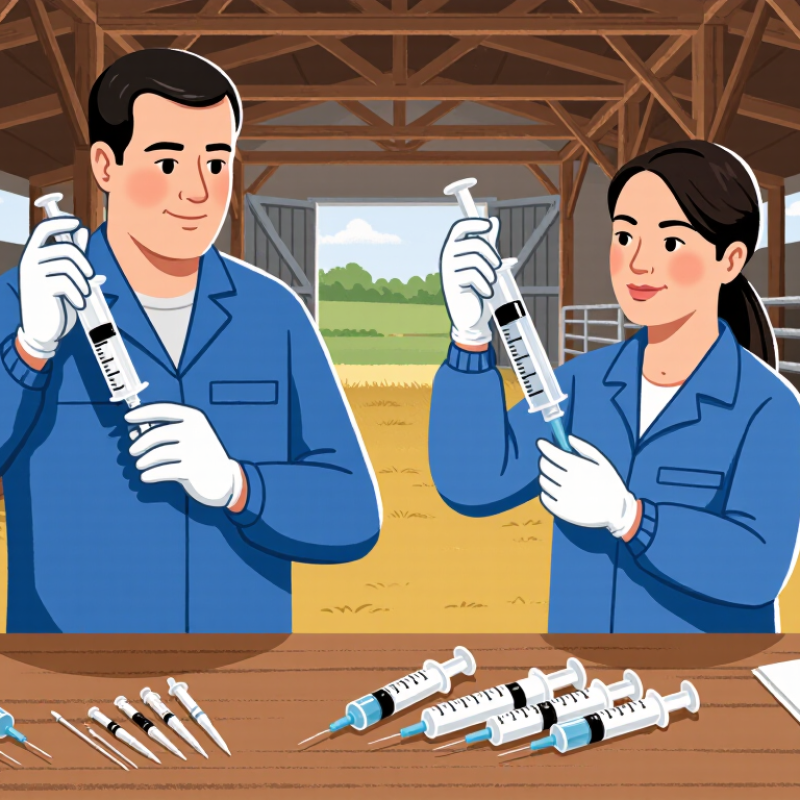
Define the Medical Needs of Different Livestock Species
How to Choose the Best Livestock Medical Syringe
Define the Medical Needs of Different Livestock Species
A suitable syringe begins with the animal, not the equipment shelf. Cattle often need larger volumes and longer needles for intramuscular or subcutaneous treatments. Sheep and goats usually require smaller, accurately calibrated syringes. Their thinner muscles can make excessive needle length risky. Pigs may need durable syringes for repeated injections and firm restraint. Horses require careful handling, precise dosing, and veterinary supervision.
Consider the medicine’s thickness and intended route. Vaccines may need a smooth, low-volume syringe with clear measurement marks. Thick medications can require a stronger barrel and wider needle. Match the needle gauge and length to the species, injection site, body condition, and prescribed route. Never estimate dosage by eye. Small errors matter.
Clean handling is essential. Use sterile equipment when required, inspect every package, and replace damaged syringes immediately. Reusable equipment needs validated cleaning and sterilization procedures. In busy barns, color coding can reduce confusion, but it is not a substitute for reading labels. Withdrawal periods must follow veterinary and medication instructions.
A common mistake is choosing one syringe for every species. It seems efficient, but it can increase tissue damage and dosing errors. I still recheck calibration before use, especially with small animals. No syringe choice is perfect without observing the animal, the medicine, and the treatment conditions. Consult a qualified veterinarian when the route, dose, or equipment is uncertain.
How to Choose the Best Livestock Medical Syringe - Define the Medical Needs of Different Livestock Species
| Livestock Species | Typical Injection Applications | Common Syringe Capacity | Practical Needle Gauge and Length | Preferred Injection Routes | Recommended Syringe Features | Important Selection Considerations |
|---|---|---|---|---|---|---|
| Cattle | Vaccines, antibiotics, anti-inflammatory medicines, antiparasitic treatments, and fluids. | 1–20 mL for most individual doses; 30–60 mL for larger-volume treatments when permitted by the product label. | Subcutaneous: commonly 16–18 gauge, 12–19 mm (½–¾ in). Intramuscular: commonly 16–18 gauge, 25–38 mm (1–1½ in). | Subcutaneous and intramuscular are common. Intravenous administration should be performed only by trained personnel. | Rugged construction, replaceable needles, a clear graduated barrel, and a comfortable trigger or dose-control mechanism for repeated handling. | Use the subcutaneous route whenever the product label allows it. Large-volume injections may need to be divided among multiple sites according to veterinary and label instructions. |
| Sheep | Vaccinations, antibiotics, vitamin or mineral preparations, and selected antiparasitic medicines. | 1–10 mL for many routine treatments; 10–20 mL for products requiring larger doses. | Commonly 18–20 gauge, 13–25 mm (½–1 in), adjusted for the route, animal size, and product viscosity. | Subcutaneous and intramuscular routes are commonly used; the approved route depends on the medicine. | Fine, accurate graduations; low dead space for small doses; a short, sharp, replaceable needle; and easy cleaning. | Accurate measurement is important because many sheep receive relatively small volumes. Avoid unnecessarily long needles and follow site-specific animal-welfare guidance. |
| Goats | Vaccines, antibiotics, analgesics, fluids, and other veterinarian-prescribed injectable treatments. | Usually 1–10 mL; larger syringes may be used only when the prescribed dose and product instructions require them. | Commonly 18–20 gauge, 13–25 mm (½–1 in); select a smaller needle for low-viscosity products and smaller animals when appropriate. | Subcutaneous and intramuscular routes are common; intravenous use requires appropriate training. | High dosing accuracy, smooth plunger movement, compact design, and compatibility with sterile disposable or reusable needles. | Goat medication use can be extra-label in some situations. The veterinarian should establish the dose, route, withdrawal period, and injection site. |
| Swine | Vaccines, antibiotics, iron injections for piglets, anti-inflammatory medicines, and other herd-health treatments. | 0.5–5 mL for piglets and many routine doses; 5–20 mL for larger pigs when permitted. | Piglets: commonly 20–21 gauge, 13–16 mm (½–⅝ in). Growing or adult pigs: commonly 18–20 gauge, 16–25 mm (⅝–1 in). | Intramuscular and subcutaneous routes are used depending on the product and age group. | Dosage-lock capability, rapid refill or multi-dose compatibility, secure needle attachment, and a barrel that remains readable during fast-paced work. | Injection-site selection is important for meat quality. Use the neck region when directed for intramuscular injections and never inject into valuable edible cuts unless specifically instructed. |
| Horses | Vaccines, antibiotics, anti-inflammatory medicines, sedatives, and emergency or supportive treatments prescribed by a veterinarian. | 3–20 mL for many routine injections; larger syringes may be used for fluids or products requiring higher volumes. | Intramuscular: commonly 18–20 gauge, about 38 mm (1½ in). Intravenous needles are selected by a trained professional based on the vein and treatment. | Intramuscular and intravenous routes are used; route selection is highly medicine-specific. | Strong barrel, smooth plunger, secure luer connection, precise graduations, and needle stability for safe handling of a large, active animal. | Only trained personnel should administer intravenous injections. Use strict aseptic technique and follow the medicine label or veterinary prescription. |
| Poultry | Vaccines, electrolyte or supportive injections, and limited individual treatments under veterinary direction. | Commonly 0.3–1 mL for individual small-bird doses; up to 3 mL for some larger birds or prescribed treatments. | Often 20–25 gauge, approximately 10–16 mm (⅜–⅝ in), selected according to bird size and route. | Subcutaneous, intramuscular, or other specialized routes may be used depending on the vaccine or medicine. | Small-volume accuracy, fine graduations, low dead space, lightweight handling, and compatibility with sterile fine-gauge needles. | Many poultry vaccines are administered through flock-specific methods such as drinking water, spray, eye drop, or mass application. Use individual injection only when the product instructions require it. |
Selection reminder: The correct syringe capacity, needle gauge, needle length, injection route, dose volume, and injection site must be based on the medicine label, animal size, product viscosity, and veterinary guidance. Do not reuse disposable needles, and replace needles whenever they become dull, contaminated, or damaged.